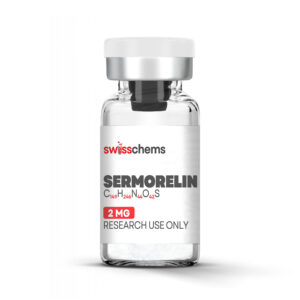
Description
High-Purity Epitalon 10 mg Industrial Chemical: B2B Bulk Procurement Guide
In industrial biochemistry, specialized peptide synthesis, and commercial manufacturing, raw material consistency and verified purity govern process efficiency. Industrial chemical buyers, laboratory directors, and B2B procurement specialists require chemical reagents that meet standardized specifications for analytical research, assay development, and commercial formulations.
If you are sourcing industrial-grade compounds for batch processing, visit registeredpeptides.co to access tested chemical inventories and wholesale bulk purchasing channels.
Understanding Epitalon 10 mg (CAS 307297-39-8)
Epitalon (also known as Epithalon or synthetic tetrapeptide AEDG) is a synthetic four-amino-acid peptide with the molecular sequence Ala-Glu-Asp-Gly. It has a molecular formula of $\text{C}_{14}\text{H}_{22}\text{N}_4\text{O}_9$ and a molecular mass of approximately $390.35\text{ g/mol}$.
In commercial and industrial chemical applications, Epitalon 10 mg is distributed in a freeze-dried (lyophilized) powder format to ensure structural stability and extend storage life under controlled conditions.
Technical Chemical Specifications
-
Chemical Name: L-Alanyl-L-alpha-glutamyl-L-alpha-aspartylglycine
-
CAS Number: 307297-39-8
-
Molecular Weight: 390.35 g/mol
-
Sequence: Ala-Glu-Asp-Gly (AEDG)
-
Form: Lyophilized solid powder
-
Purity Standard: $\ge 98\%$ evaluated by High-Performance Liquid Chromatography (HPLC)
-
Solubility: Soluble in aqueous buffers and polar solvents
What Industrial Chemical Users Need and Require
Sourcing chemical compounds at scale involves operational requirements beyond retail purchasing. Chemical facility managers, procurement officers, and quality assurance leads evaluate critical criteria before issuing purchase orders:
1. Batch Purity and Certificate of Analysis (COA) Validation
Industrial users require batch-specific verification for every shipment. Procurement teams need comprehensive Certificates of Analysis showing independent HPLC chromatograms and Mass Spectrometry (MS) identity verification to confirm sequence fidelity and rule out heavy metal or organic impurities.
2. Scalable Supply Chain and Bulk Pricing
Manufacturing and large-scale analytical testing require reliable inventory pipelines. Industrial buyers look for suppliers capable of transitioning from 10 mg diagnostic-scale units to multi-gram or kilogram bulk quantities with volume-tiered pricing structures.
3. Material Safety Data Sheets (MSDS / SDS)
Full regulatory compliance requires complete documentation. Chemical handlers must receive accurate Safety Data Sheets outlining handling procedures, personal protective equipment (PPE) recommendations, chemical hazard profiles, and proper waste management protocols.
4. Thermal Stability and Specialized Packaging
Peptides degrade when exposed to heat, moisture, and light. Commercial buyers require hermetically sealed, light-protected vials shipped under temperature-controlled packaging (such as ice packs or dry ice) to ensure high chemical stability upon delivery.
5. Regulatory Compliance and Documentation
Chemical buyers need clear material classification. Raw chemicals must be supplied strictly for non-clinical laboratory research, institutional assay development, and industrial manufacturing applications, accompanied by clear terms of sale.
Commercial Applications in Industrial Research
Industrial chemical users source Epitalon 10 mg for several specialized workflows:
-
In-Vitro Cell Culture Assays: Used in cell culture media formulations to investigate cellular signaling pathways, telomere dynamics, and gene expression models.
-
Enzymatic & Telomerase Studies: Serving as a primary reference material for testing pineal peptide biology and enzymatic activation pathways.
-
Analytical Reference Standards: Utilized by analytical testing facilities to calibrate mass spectrometers, HPLC columns, and chromatography systems.
-
Cosmeceutical and Biochemical Formulation Development: Evaluated in early-stage raw material synthesis for topical peptide research and anti-aging ingredient development.
Handling and Storage Protocols
To maintain chemical integrity in industrial laboratories:
-
Unopened Powder: Store the unopened lyophilized vial at -20°C to 2–8°C in a dry, dark location.
-
Reconstitution: Allow the vial to equalize to room temperature before reconstituting with sterile, laboratory-grade diluents.
-
Solution Storage: Once in solution, store aliquots at low temperatures (-20°C or colder) to prevent freeze-thaw degradation cycles.
For institutional bulk orders and verified chemical supplies, visit registeredpeptides.co to review product listings and request custom supply quotes.

Reviews
There are no reviews yet.